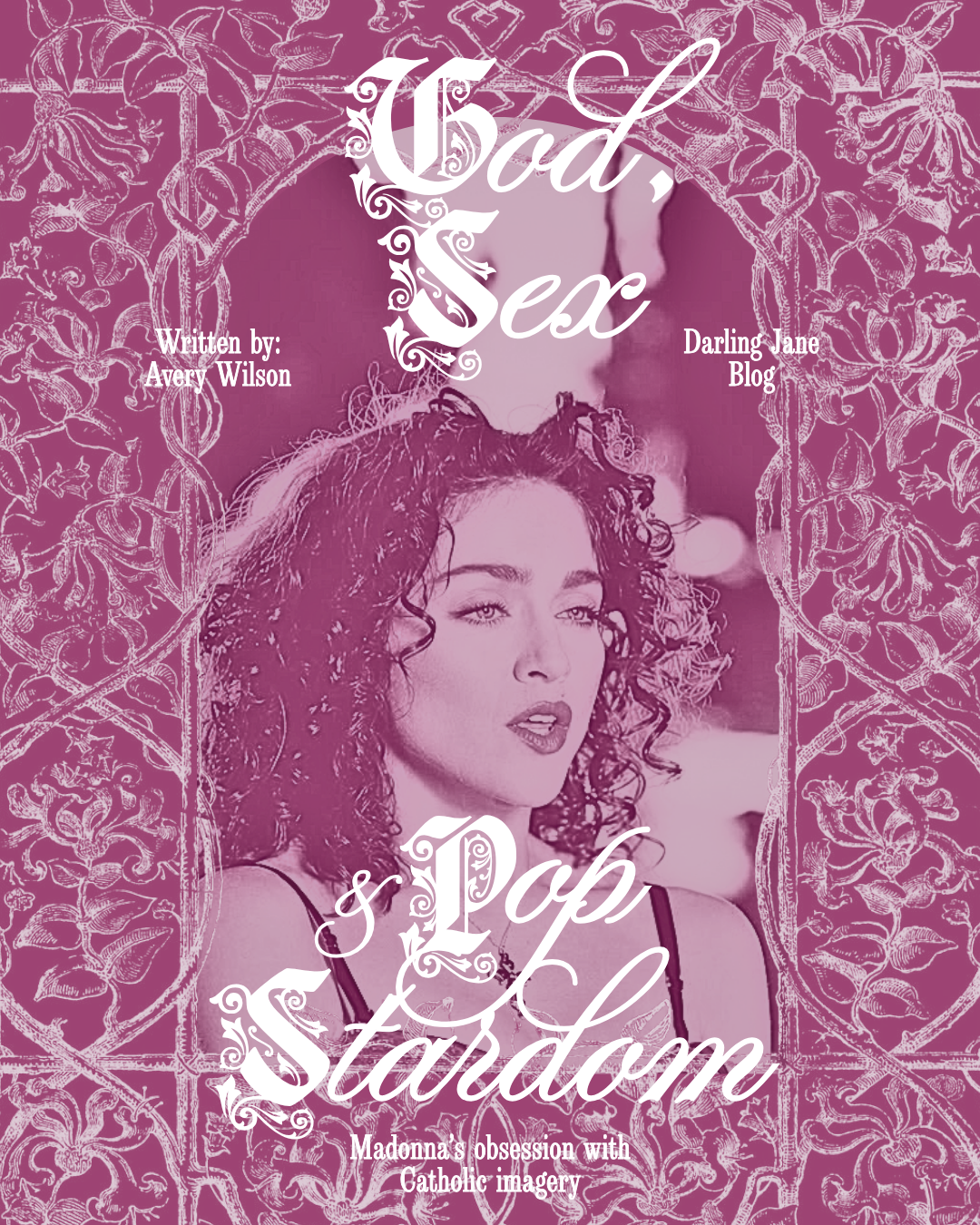
God, Sex and Pop Stardom: Madonna’s obsession with Catholic imagery.
“Life is a mystery. Everyone must stand alone, I hear you call my name, and it feels like home.” These words are murmured into my ear as I huff through the last mile of my run, giving me the holy strength to finish my journey. God was speaking to me, sharing his wisdom upon but a feeble runner, except it wasn’t God; it was Madonna. Even better. Her status as a creamy, smooth pop-icon goddess has attracted the same level of worship one might reserve for a religious figure, and rightfully so. As obvious as it sounds, there really is a spiritual quality to the song, a pure exclamation of devotion in a time of need, calling upon this savior as a gospel echo to her prayer back to her. It’s just too good.
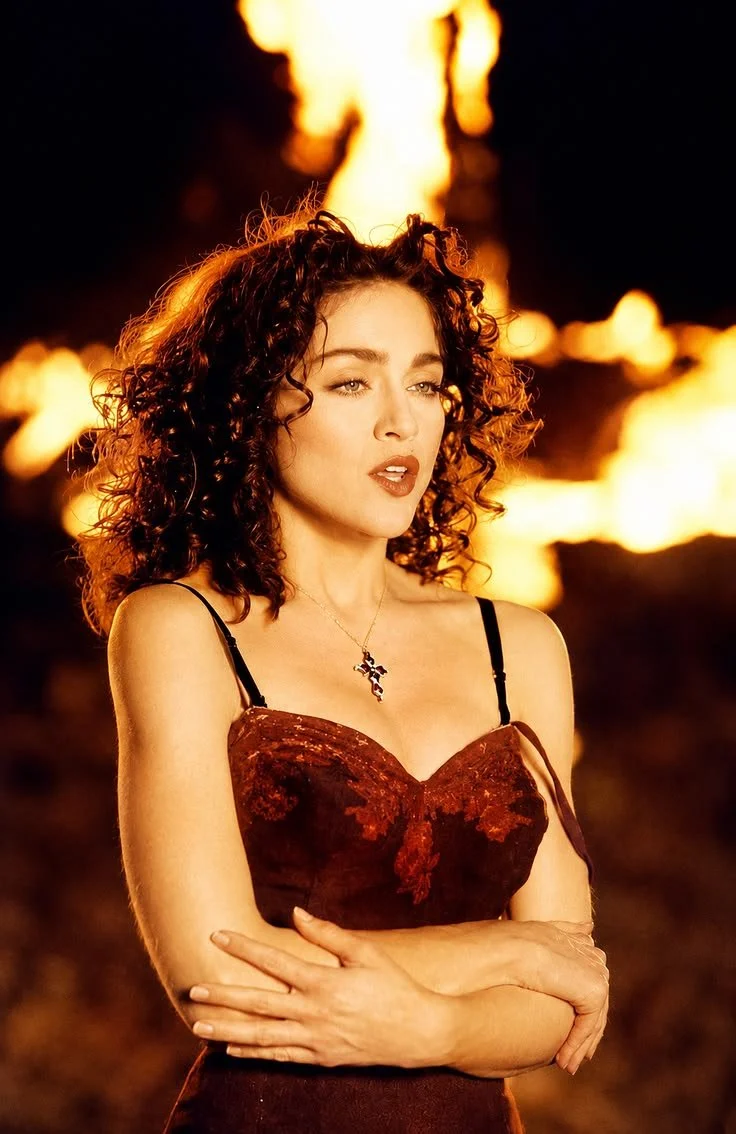
In the video for “Like a Prayer,” the pop goddess, adorned with a cross necklace and a little black dress, finds refuge in a church after witnessing a crime in which a group of white men attacks and kills a woman. A Black man sees them and scares them away. As he checks up on the woman, the cops arrive and arrest him. The implication is that the black man standing over the victim must be the attacker. After fleeing the scene, Madonna stumbles into the church and prays at a statue sitting on the altar. She falls asleep and dreams that the statue has come to life and is the same man the police arrested. The two share an embrace as the man cries, and the interaction jogs Madonna’s memory of what really happened, prompting her to go to the police station and offer a statement in an act of justice as the video ends.
The video drew inspiration from themes of Catholic guilt, systemic injustice, and "forbidden” interracial romance, all filtered through Madonna’s Roman Catholic upbringing. Madonna has long been open about her complicated relationship with religion, often described as something of a religious puzzle, as she ebbs and flows between different spiritual traditions. Arguably, however, “Like a Prayer” was one of the first times she expressed those contradictions through her art on such a massive scale. The result was less a rejection of Catholicism than an interrogation of it, the guilt, desire, devotion, and shame that can coexist within the faith.
Following the video's premiere, Madonna faced intense media scrutiny and backlash from religious groups, eventually leading Pepsi to cancel its sponsorship deal with her. The controversy was fueled in part by the Vatican's condemnation of the video and complaints over its provocative religious imagery: Madonna's revealing dress in a church, burning crosses, her intimate encounter with a saint, and the visual suggestion of stigmata. Even the sacred was fair game for Madonna, who seemed less interested in desecrating Catholic imagery than in making it her own.
By today's standards, the video is quite tame and the song even tamer, but for its time it was groundbreaking, almost unheard of. Madonna's cultural impact as a trailblazer in pop music, challenging religious and sexual taboos, paved the way for generations of female artists. She turned controversy into a tool for social change while pioneering the music video as a legitimate storytelling device. Perhaps one of her most important contributions to pop is the formula she created for reinvention she was never afraid to shift her style or sound, experiment, and immersing herself in whatever her art called for mattered more than playing it safe there's a reason she has a song called “Bitch I'm Madonna” when you live long enough to become the go-to pop reference you get to boast about it.
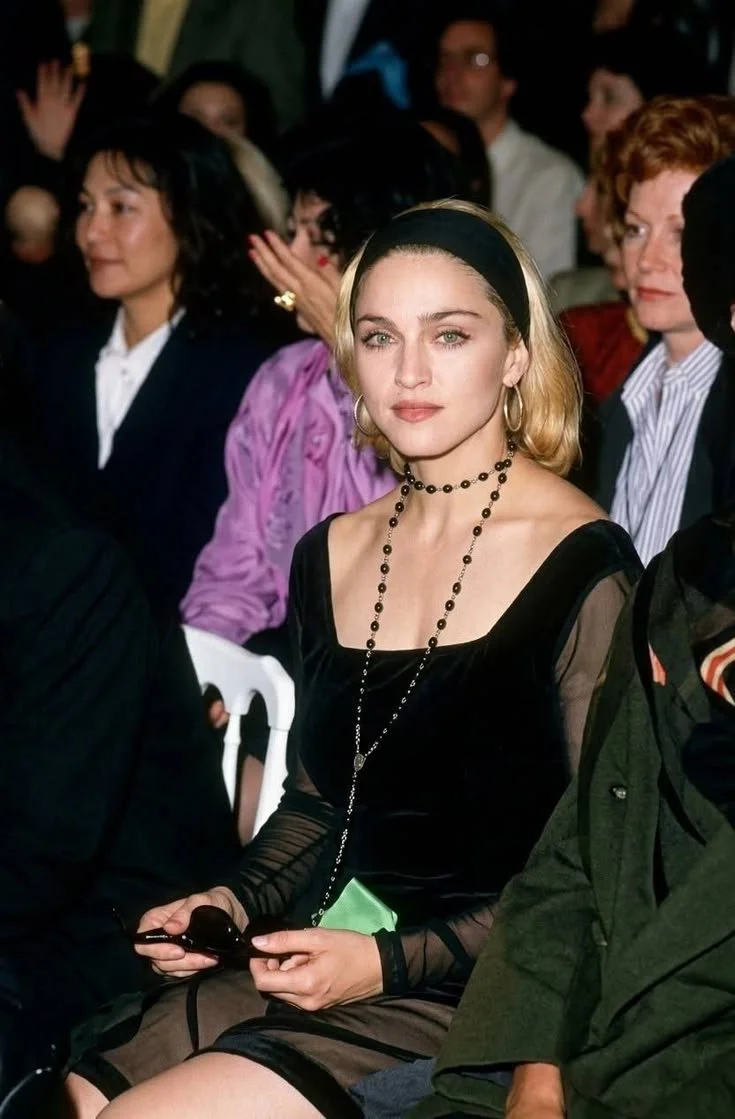
Throughout her decades-long career and many eras, among all the spiritual affiliations Madonna has explored her use of Catholic imagery as remained one of the Defining threads of her Artistry it seems almost faded for a girl named after the Virgin Mary that her Roman Catholic upbringing would become such a driving influence on her work since the beginning of her career Madonna has used Catholic iconography as a visual and lyrical reference from the rosaries she layered with necklaces to songs that grappled with religious guilt sexual shame and desire her willingness to confront these subjects so publicly maybe part of what has created such a lasting connection with her audience you have to remember that in the '80s nobody was making pop songs about feeling guilty for sexual desire. If they were, they certainly weren't saying it so literally.
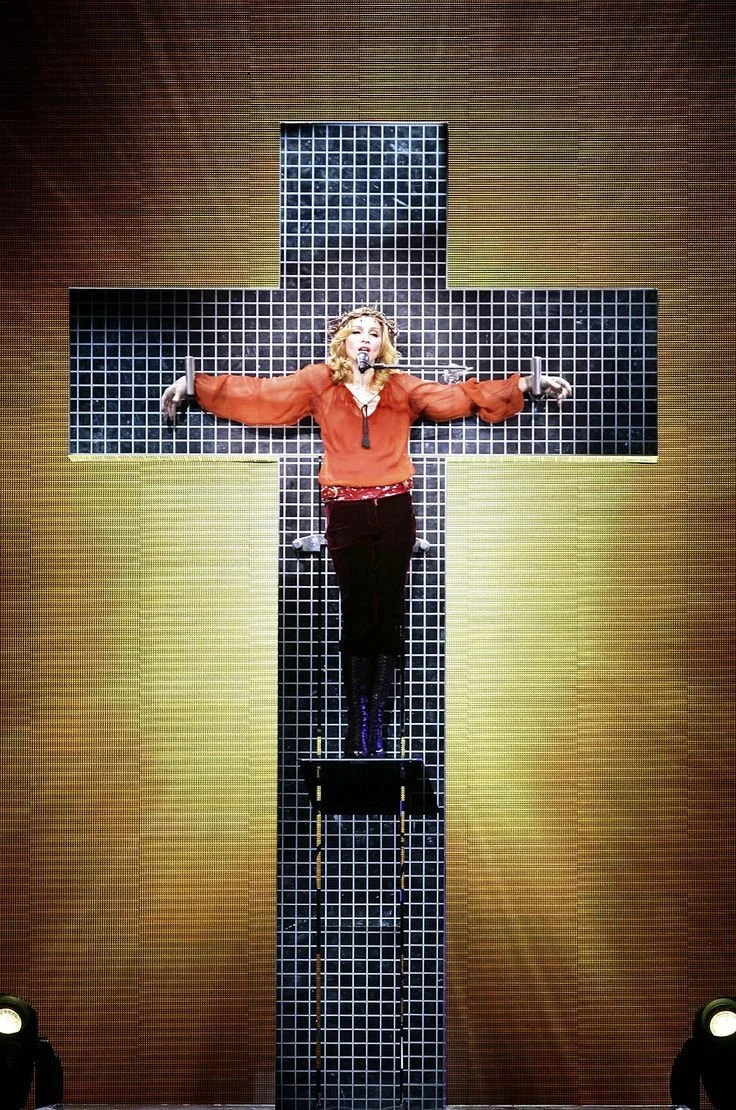
I think this is especially true for those in marginalized communities who see themselves in Madonna and recognize their own feelings of shame and otherness. She helped bring Ballroom culture into the mainstream and became an outspoken advocate for the LGBTQ+ community during the AIDS crisis in the '80s, shortly after her debut; cultural critics were already examining the religious connotations of her pop stardom throughout her performances. Catholic imagery has appeared in countless forms, from confessional booths on stage to crucifixion imagery; she's always played with the symbols and rituals that many others were too afraid to touch, turning them into something provocative, glamorous, and distinctly her own.
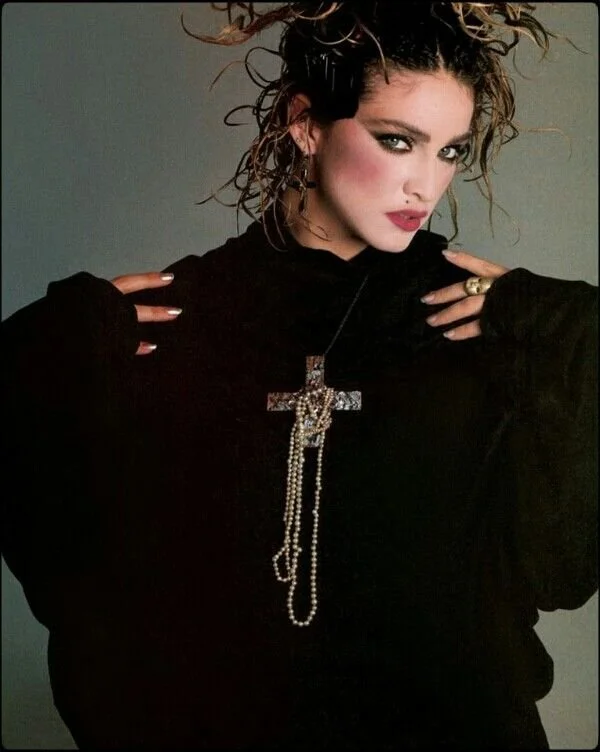
Madonna's relationship with the Catholic Church is exceedingly complex; she has been open about her resentment toward the religion, and her ambivalence was shaped in part by growing up in a strict Roman Catholic household and witnessing what she described as her mother's intense relationship with the faith. Madonna once recalled, “I saw my mother doing things that really affected me. She would kneel on uncooked rice [...] If my aunt came over my house and had jeans that zipped up front, my mother covered all the statues so that they couldn't see such a display.”
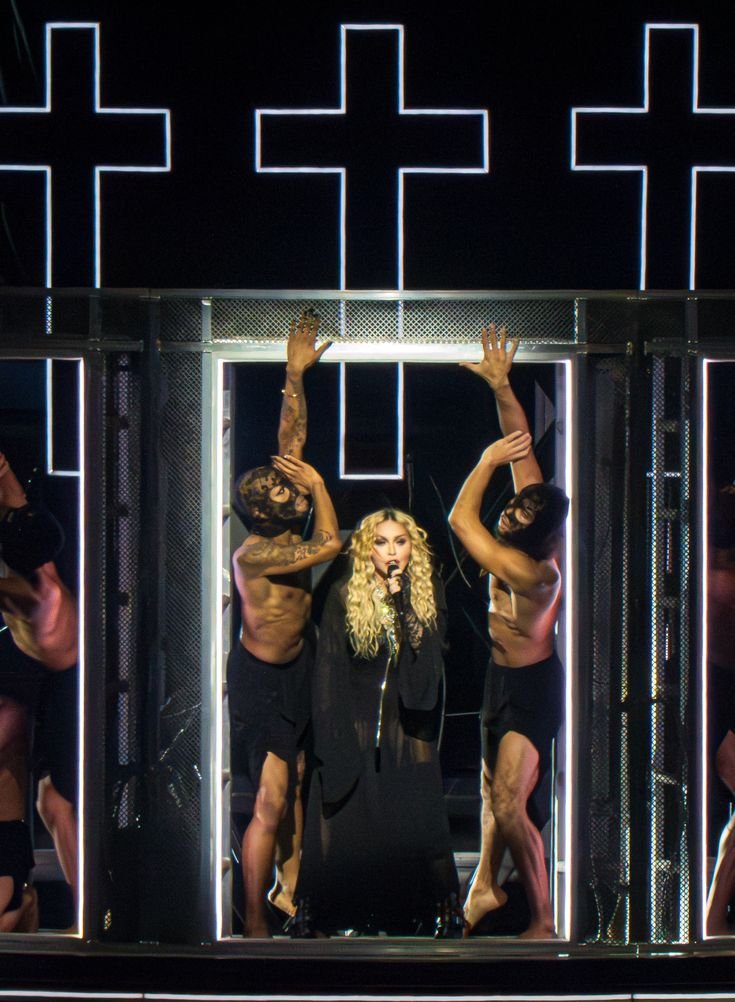
Madonna made a major spiritual turn in the mid-90s following the birth of her daughter when she began practicing yoga and studying spiritual traditions from South Asia, including Buddhism and Hinduism. Her interest in these practices helped bring yoga and Eastern spirituality further into the pop cultural mainstream, making her one of the early celebrity figures to incorporate these influences into her work openly. later became deeply involved with the Kabbalah while still maintaining a Christian education for her children. It's clear that Madonna has always been drawn to spirituality and divinity, while much of her conflict seems to lie with idolatry and organized religion itself; her faith interest has rarely been institutional or strictly theological. Instead, she takes a distinctly postmodern, eclectic approach to spirituality, pulling from whatever speaks to her.
Even now, with the release of her latest album “Confessions II,” Catholic imagery remains part of Madonna's visual language whether intentional or not. I do believe Madonna set the precedent for generations of pop artists who would go on to use Catholic imagery in their work. She made the cross sexy, the rosary fashionable, and religious guilt something you could dance to. Maybe that's the real Madonna Miracle, taking things that were taught to fear and turning them into pop.