The Literary Situationship of Donna Tartt and Bret Easton Ellis
Like many others, I have been bombarded with promotion for Ryan Murphy's latest television Venture, “The Shards.” It seems like I can't go online or apparently anywhere in California without encountering interviews, billboards, and editorials featuring the Beautiful, airbrushed cast of nepo babies bringing Brett Easton Ellis's novel to life. When the series was first announced, I rolled my eyes in pretentious annoyance that, of all people, Ryan Murphy had gotten his greedy little paws on the adaptation rights. I've seen how that man does the 80s, and I was already dreading the visual of supposedly wealthy Los Angeles teenagers dressed head to toe in neon Shein.
Much to my surprise, the show isn't a bad adaptation at all. (At the time of writing, the series is still airing, so ask me again when it’s over.) Casting beautiful, shiny nepo babies as spoiled, troubled Rich Kids turns out to be a surprisingly Brilliant choice, and the performances I've seen so far have captured the shallow, vapid quality of Alice's characters in a way I wasn't sure could translate beyond the page. All “The Shards” fodder eventually reminded me of my enduring love for Brett Easton Ellis's work, which naturally led me back to one of my favorite pop culture situationships: Bret Easton Ellis and Donna Tartt. Yes, that Donna Tartt. The Donna Tartt who wrote “The Secret History”.
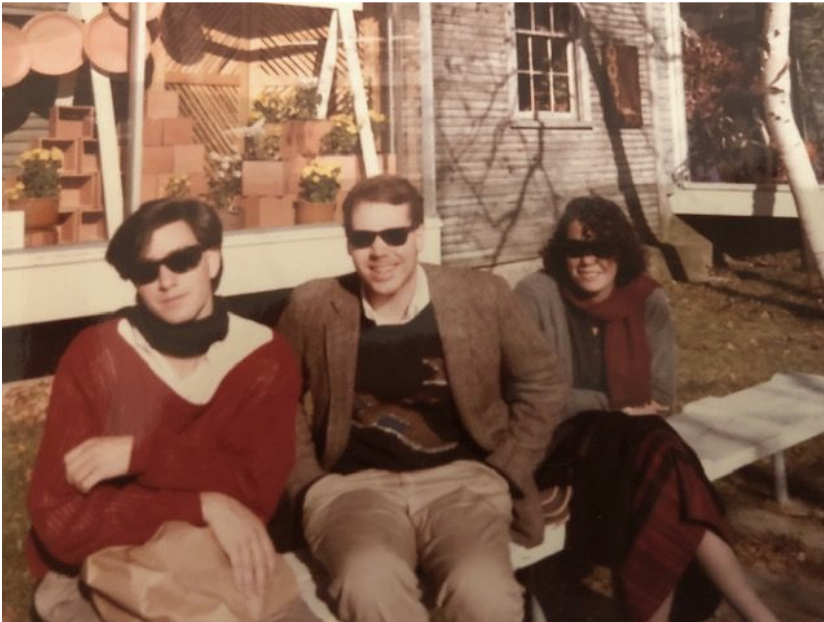
You can imagine how explosive this information was to teenage Avery two of my favorite authors member of the literary brat pack at allegedly been romantically involved, how scandalous! Being the young nosy girl I was I went straight to my computer and discovered that the two had met at Bennington College as part of the legendary class of 1986. There must have been some sort of transcendent genius floating through the air at Bennington in 1982, or perhaps the school itself was simply one of those rare places where all four winds seem to meet at once. Whatever the explanation, Bennington has since been mythologized alongside the writers who passed through it: Brett Easton Ellis, Donna Tartt, and Jonathan Lethem. All future literary heavyweights were there at the same time, contributing to an emerging, debauched, insular culture that would become part of the school's legend. For a certain kind of young writer, Bennington wasn't simply a college; it was a petri dish for literary ambition, excess, and apparently some very complicated friendships.
For the unfamiliar, Bennington College is a private liberal arts school tucked away in Vermont. In the '80s, however, Bennington didn't have quite the prestigious reputation it carries today; in fact, it was almost the opposite. The school was known as a playground for the wayward children of privilege, a place where rules, grades, and requirements seemed almost beside the point. Its admissions process was famously loose; Bennington was hardly stingy with acceptance letters in keeping with its devotion to Freedom. The thinking seemed to be that if you could afford the very, very steep tuition, you were in; that was no problem for Brett Easton Ellis, who arrived from Sherman Oaks, California, the son of a successful real estate developer.
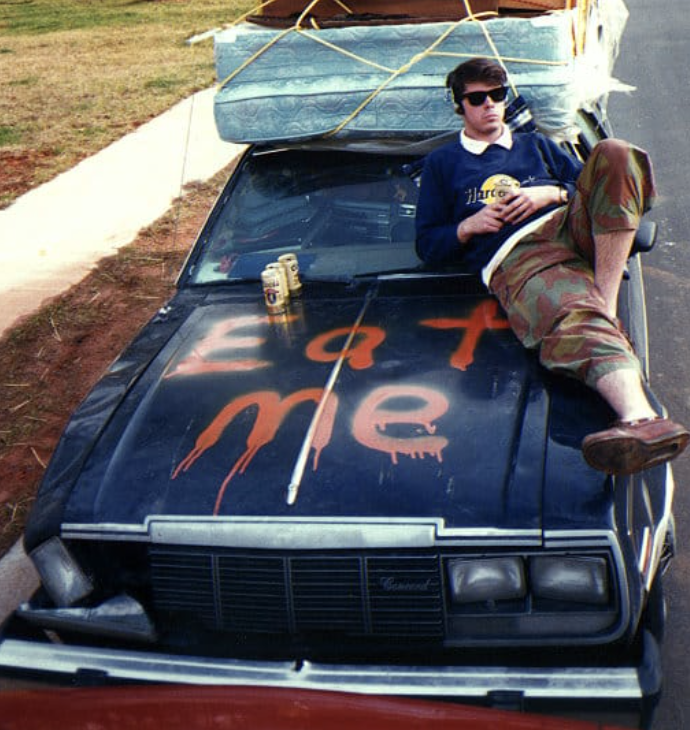
For teenager growing up in Los Angeles in the 1980s it was easy to feel as though you were living at the epicenter of youth culture a vibrant buoyant state of delirium that the rest of the country could only look in on. Ellis grew up in this world surrounded by the glamor, access, and alienation of Los Angeles, all of which would eventually find their way into his debut novel “Less Than Zero,” published in 1985 when Ellis was just 21 and still a student at Bennington. The novel transformed his teenage experiences into a portrait of a generation seemingly spoiled by its own abundance. Hearing all that certainly makes me feel accomplished.
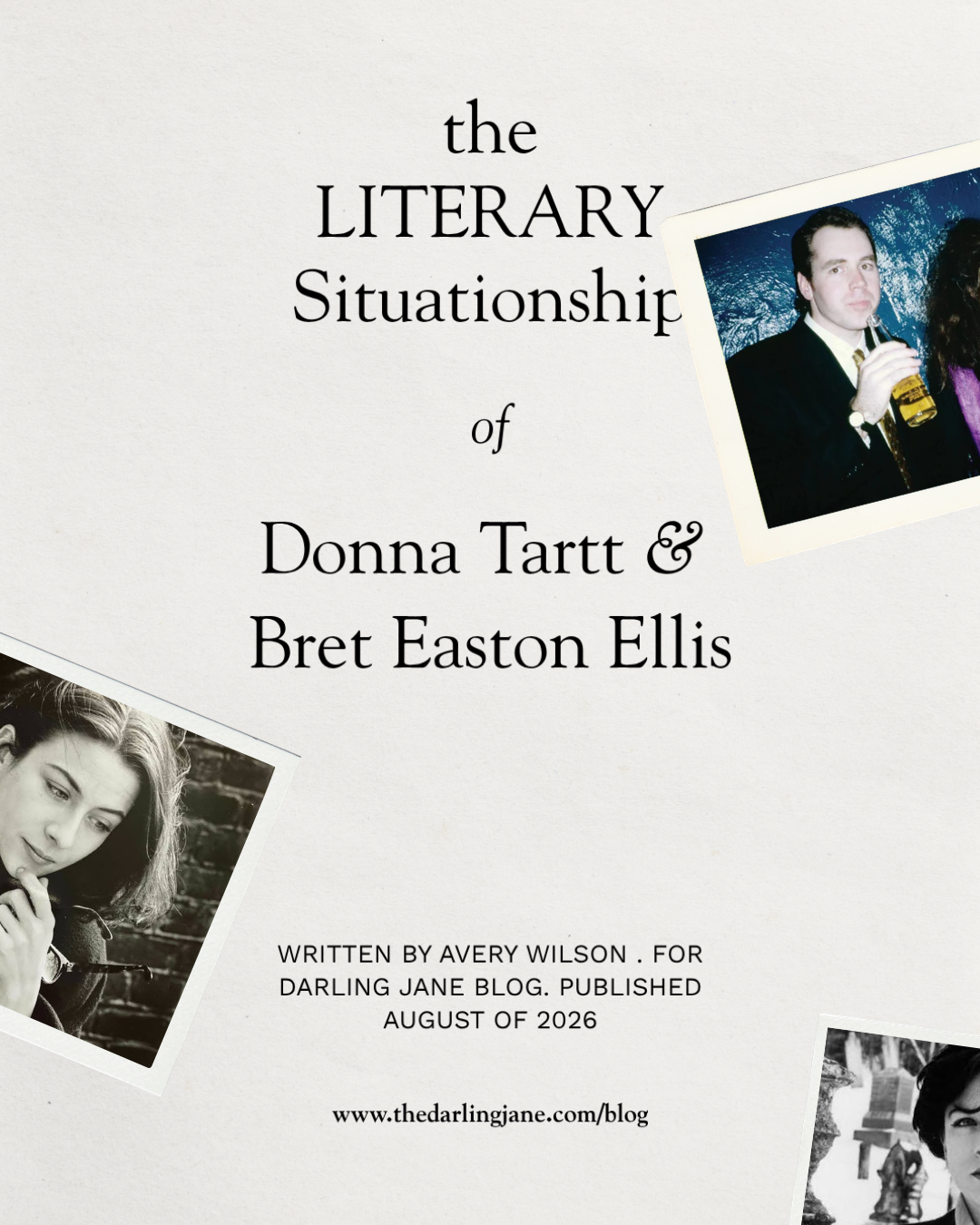
Bret Easton Ellis arrived on Bennington's campus with two suitcases: one filled with pages of stories that would eventually become his debut novel “Less Than Zero” and the other packed with drugs. Certainly, it was one way to assess a new environment. Ellis had little trouble making an impression at Bennington, where his Wayfarer glasses and unmistakable LA style made him stick out among his classmates, while his talent in the writing program quickly earned him attention. He met Donna Tartt through his roommate, who was loosely dating her at the time, though the two writers wouldn't go out until after Thanksgiving break, when they met for a drink.
If Ellis arrived at Bennington looking like he had wandered in from Los Angeles, Tartt seemed almost to have arrived from another century. A Mississippi native and transfer from the University of Mississippi, she was already deeply immersed in the classics, studying in Greek and Latin and writing stories that left her classmates dumbfounded by their sophistication. She dressed with an almost obsessive precision: tailored trousers, button-up shirts, polished shoes, and, unlike many of her classmates who seem to reinvent themselves every semester, Tartt remained remarkably consistent. Ellis later recalled seeing her at a campus party in a seersucker suit, cigarette in hand, seemingly untouched by the sartorial chaos around her.
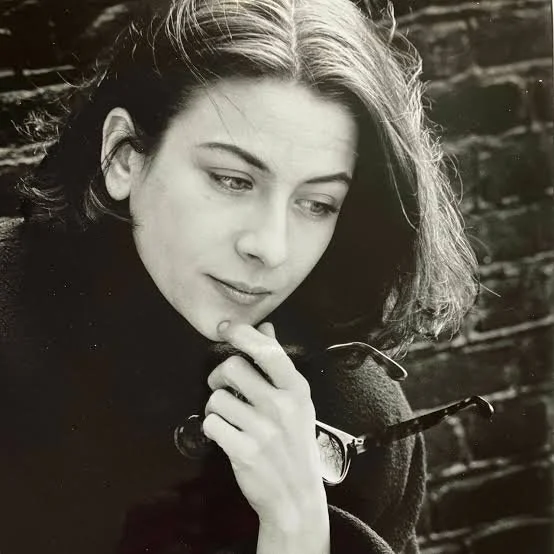
That sense of control extended beyond her appearance; Tartt was sociable but intensely private. She could host elaborate “tea parties” in her room, surrounded by other writers, and yet leave her classmates feeling that they knew very little about her. Her room became something of a salon; she quickly developed a reputation as one of the campus's literary stars. Even before she had published a book, her writing seemed to carry an authority unusual for a college student; her stories were mysterious, meticulously structured, and often ended in death. By her second year at Bennington, she had begun writing the novel that would become “The Secret History”, showing the developing manuscript to Ellis almost from the beginning.
The contrast between them is what makes their friendship so fascinating: Ellis was loud, where Tartt was guarded, contemporary where she seemed almost anachronistic, and increasingly interested in the cultural world outside the college. Tartt, meanwhile, seemed to be constructing a world entirely of her own; she possessed the strange quality of someone who is both highly visible and fundamentally unknowable a literary celebrity before she was technically a celebrity. Her mystique would only grow with time, shaped as much by what she withheld as by what she revealed. Even as fascination with her intensified, Tartt remained firmly in control of how much of herself the public was ever allowed to know. Perhaps this is why I, like many others, am so fond of her.
Perhaps the most revealing part of their relationship is what remained unspoken. When Ellis and Tartt met at Bennington, Ellis was not publicly out, and the intimacy of their friendship existed within a very different cultural landscape than the one we know today. Whatever romantic feelings may or may not have existed between them, their creative relationship was undeniable. They were close friends, fierce literary competitors, and in many ways each other's earliest witnesses. Tartt would eventually dedicate “The Secret History” to Ellis, A small but remarkably intimate gesture considering the mythology that would later surround both of them. Ellis, meanwhile, had a front-row seat to the creation of the novel that would make Tartt an icon.
Maybe that is what makes their Bennington years so endlessly fascinating to me (so much so I applied to that school knowing damn well I wouldn’t go). Ellis would go on to become one of the great chroniclers of American excess, with an unmatched ability to encapsulate an era of consumerism and pop culture, all in a novel that reads like a magazine. Tartt went in the opposite direction, becoming an increasingly elusive figure, constructing “Donna Tartt” into something larger than the woman herself: The sleek black bob, the tailored suits, the cigarettes, the mystery. Like Jay Gatsby, she understood the power of reinvention and perhaps the power of letting people wonder what was behind it.
Their friendship existed before either had become the literary figures we know today, back when they were simply two ambitious young writers in Vermont, constantly trying to outdo each other. That, more than any rumored romance, is what makes their relationship so irresistible: they knew each other before the mythology began.