Kirsten Stewart's interview with The New York Times sparked an online conversation on 'the method'. In the viral clips, Stewart highlights that "performance is inherently vulnerable and therefore quite embarrassing and unmasculine. There's no bravado in suggesting that you're a mouthpiece for someone else's ideas." She went on to claim that male actors often lean on method acting to protect their masculinity, as it offers a veil of control. Method acting is often misinterpreted as staying in character constantly, even on or off stage. However, its origins trace back to Russian actor Konstantin Stanislavski, who developed a system for actors, in which they draw upon personal emotions rather than attempting to pretend. Two interpretations stem from Stanislavski's system. Some actors will draw upon personal experiences to bring out emotions.
Others attempt to become so familiar with their characters that they intuitively feel what they do. Contemporarily, in the digital age, a new form of method acting arises. Actors portray themselves online from their personal accounts or in interviews, as the characters in their upcoming films. Here, invasive as ever, social media meets us where we are, in our homes, on our commutes, and invites us into a digital form of 'the method'. The parasocial relationships that social media fosters are weaponised as fans begin to feel that actors really are their characters. Studios are no longer selling a film; they are selling a world, and the actors are presented as its permanent residents. 'the method', once confined to the rehearsal room and actors' personal lives, has bled into the press tour.
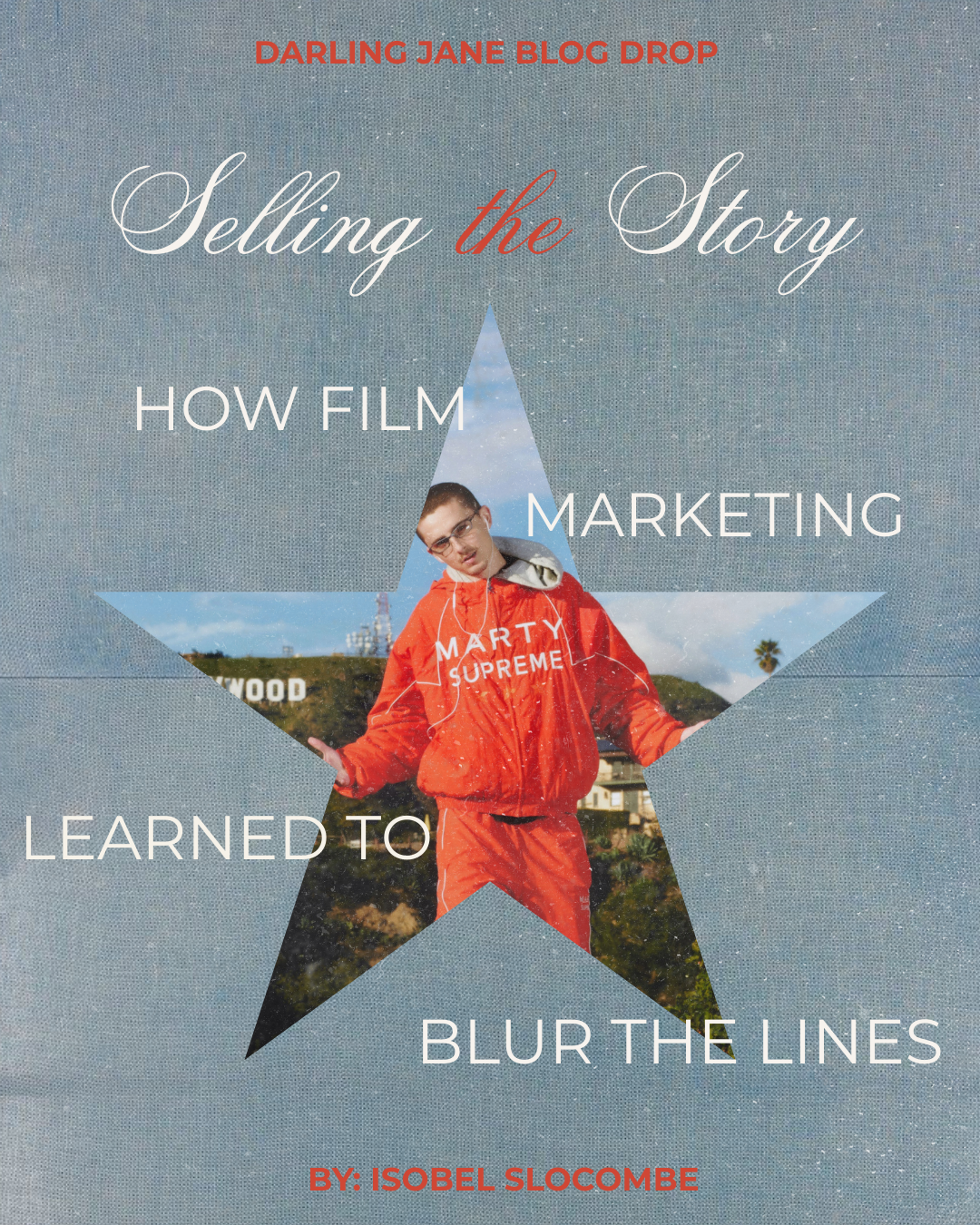
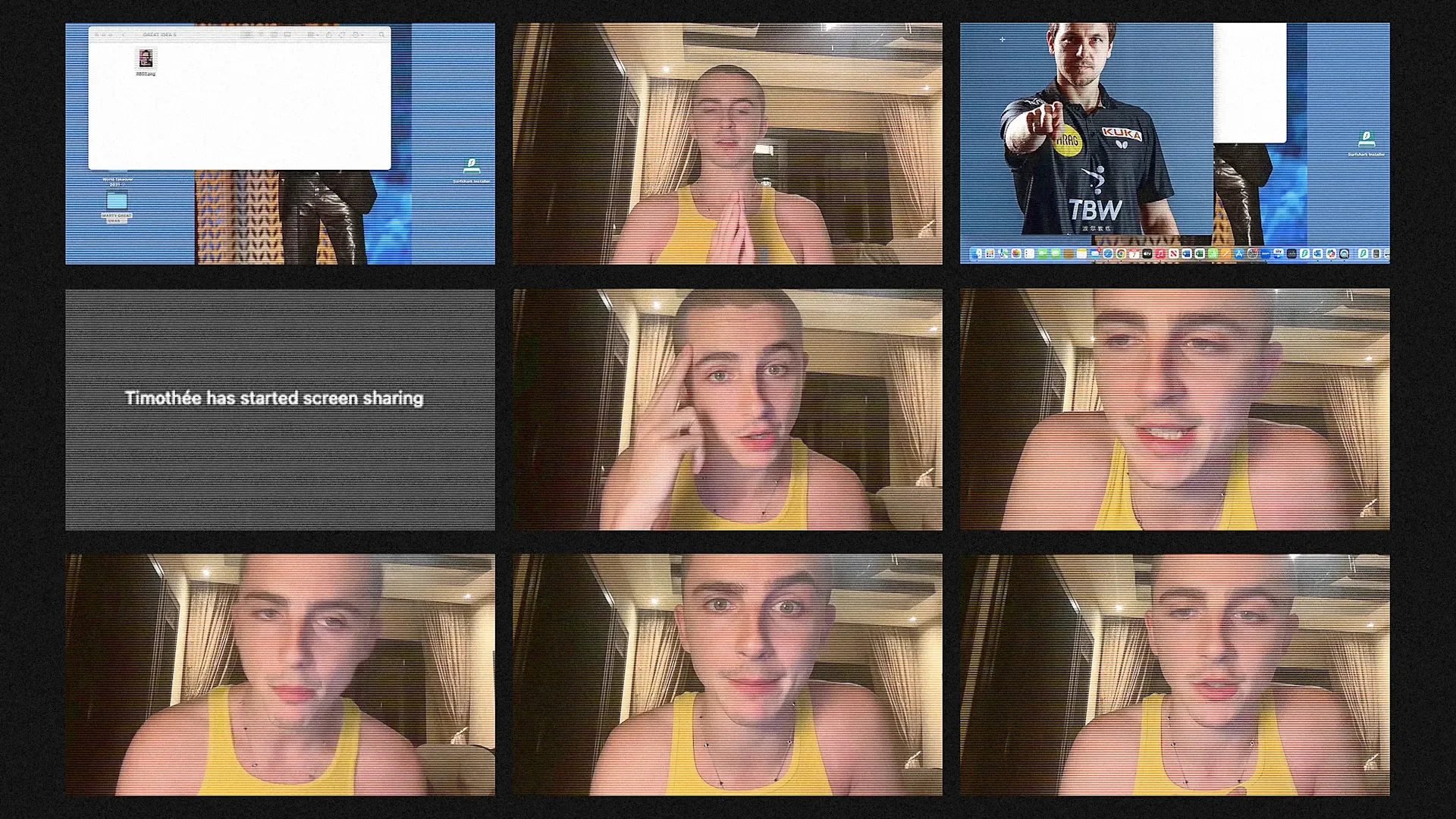
“Marty Supreme” was a notable case study. Timothée Chalamet's promotion of the A24 film, in which he plays Marty Mauser, a swaggering, self-mythologising ping-pong champion, saw the actor adopt his character's arrogance as his own public persona. In interviews, he declared himself in pursuit of greatness. He staged a viral Zoom call in which he pitched increasingly absurd marketing ideas to A24 executives. He owned a color, a specific, corroded shade of orange, and gifted it to everyone from Kylie Jenner to Susan Boyle. When questioned about the braggadocio, his response was characteristically Marty: "This is in the spirit of Marty." The line between actor and character had not blurred. It had been strategically dissolved. Whether this constituted genuine artistic commitment or an extraordinarily sophisticated marketing campaign is, perhaps, the wrong question. In the attention economy, the two are no longer distinguishable. Chalamet and the “Marty Supreme” team understood this fluently. Now, performance does not end when the cameras stop rolling, because the cameras never stop rolling. Every post, every stunt, every leaked Zoom call is a frame.
What Stanislavski could not have anticipated is that the stage would eventually expand to swallow everything. The rehearsal room is now the internet, and the audience is always watching. Not from velvet seats at a distance, but from the intimate blue light of their own bedrooms, feeling, as parasocial logic demands, that they know the performer personally. Studios have learned to exploit this. The most compelling performances of our current cultural moment may not be happening on screen at all. In a similar vein, actors playing couples onscreen perform the same dynamics online. Amongst the press storm that preceded Emerald Fennell’s contentious “Wuthering Heights”, Margot Robbie and Jacob Elordi, Cathy and Heathcliff attempted to coax fans into believing the romance extended beyond the film. Interviews uploaded to various YouTube channels show the pair fawning over one another. Fans reading into “knowing smirks”; fire stoked by revelations that the pair had shrines to one another in their dressing rooms. Reportedly, Edoldri went as far as to send Robbie hundreds of red roses. In the gothic tradition of the novel itself, the longing was kept deliberately unresolved, and fans, conditioned by parasocial intimacy to read personal truth into every public appearance, consumed it hungrily.
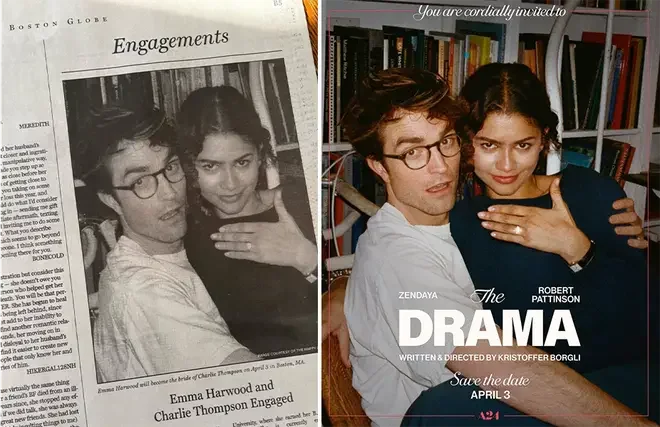
“The Drama” operates on a similar, though more subtle logic. Zendaya and Robert Pattinson, who play an engaged couple in the film, have cultivated an Instagram presence in the months surrounding its release that makes that fictional engagement feel oddly plausible. Whilst Zendaya is famously engaged to Tom Holland, she uploaded fake wedding photos and engagement polaroids to Instagram. A mock engagement announcement was even printed in The Boston Globe. The studio does not need fans to believe the relationship is real. It only needs them to ruminate over the possibility of a world in which it is. In the attention economy, the question is the commodity, and it can be manufactured indefinitely, for free, by actors who have simply learned to leave the door slightly ajar.
We have seen how the digital makes it harder and harder for us to discern truth. Truth from what exactly, though? Perhaps this is just an extension of the art. The fixed binaries that used to distinguish film and art from viewers and real life are demolished. We are invited to step inside, or at the very least buy into, the fantasy.