Mirror Palais: Thoughtful Couture in a Sea of Polyester
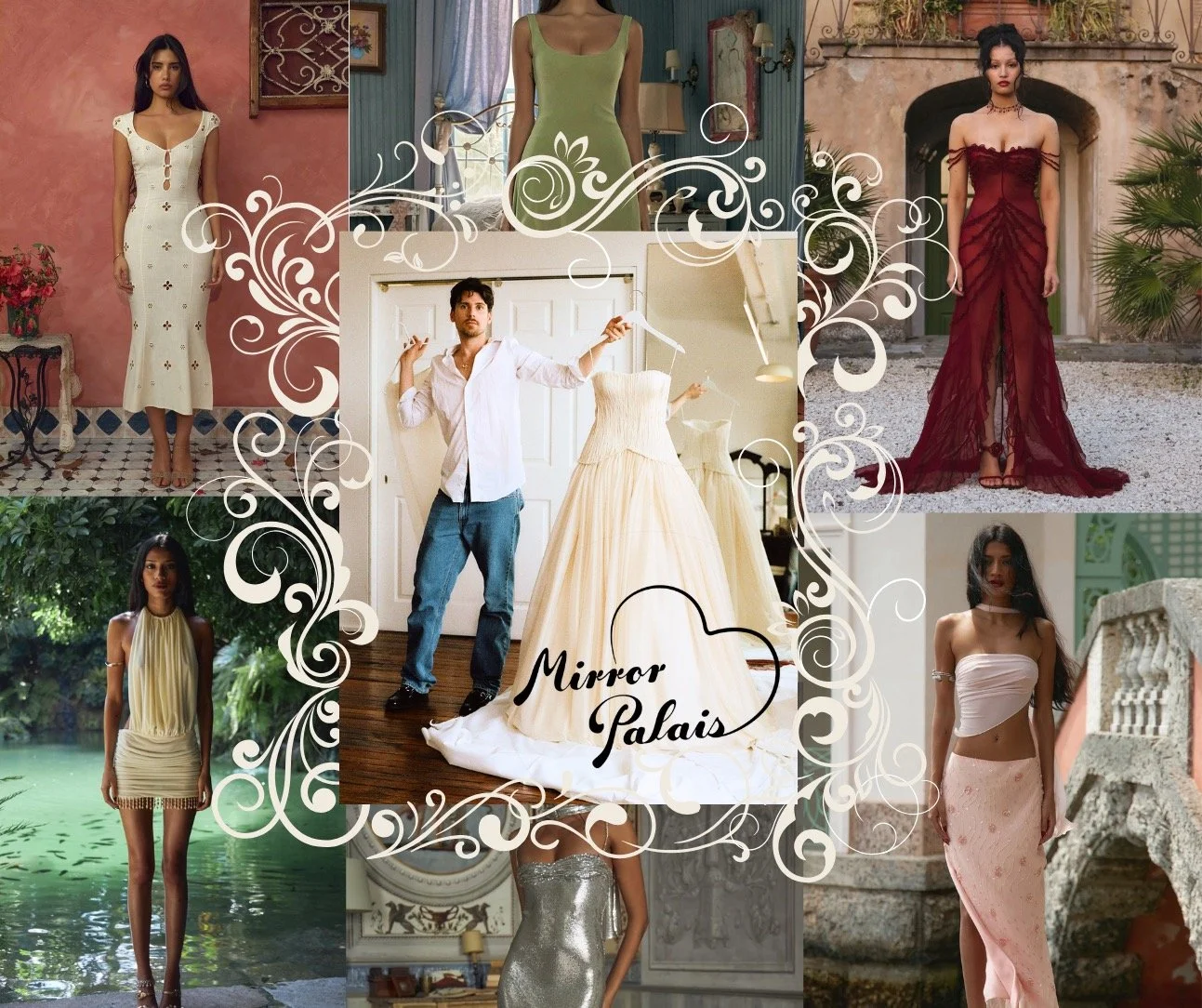
I may be a broke college student, but that doesn’t stop me from wishing, hoping, and dreaming of luxury items. I have a Pinterest board of Vera Wang wedding dresses and regularly check the Chloé website to see whether they’ve released new colorways of the Paddington bag. After years of online window shopping, one lesser-known brand remains at the very top of my wishlist.
Mirror Palais is a small business based in New York that just screams chic. Before you even notice the extravagant garments on their website, the artful photography captures your attention. Stunning models pose in front of Victorian-era mansion fireplaces, colorful verandas, and ornate drapery, creating an elegant atmosphere.
Aesthetics aside, the garments speak for themselves. Designer Marcelo Gaia started the brand in 2019 and takes inspiration from Catholicism, Brazil, and his mother's closet. Gaia embraces the feminine form, creating versatile designs that drape fluidly against the female silhouette. The brand boasts limited-release lines and made-to-order garments cut from vintage fabrics, adding to its sense of exclusivity.
Mirror Palais is pricey, but Gaia is quick to justify the cost. The brand emphasizes its fair labor practices and ethical sourcing, ensuring that workers throughout the production process are paid a living wage. Sustainability is another pillar of the business, and most lines are made entirely from natural fibers. With each line, Gaia addresses online comments criticizing the price and explains what went into making each piece. Textile education is a large part of Gaia’s mission, and he often informs his audience on why he chooses certain fabrics and which ones he avoids. He acknowledges that the average person cannot afford 100% silk; however, he explains that if you have the means to choose, avoiding polyesters benefits both the consumer and the environment.
Thanks to the power of social media, the brand has skyrocketed. High-profile women such as Sabrina Carpenter, Ariana Grande, Bella Hadid, and Kendall Jenner have all sported custom-made garments from the brand, further boosting its prominence.

But with this virality comes imitation. Fast fashion brands whose business practices are the antithesis of Mirror Palais have blatantly ripped off Gaia’s designs for years. In one TikTok, Gaia claimed that a limited-release Valentine's Day PJ set he sold just 53 of had been duped and sold on TikTok shop over 5,000 times, with some brands even stealing images directly from the Mirror Palais website. Gaia addressed his frustration, stating, “Now I work full time as the unpaid research and development department for countless fast fashion companies.” Even as the brand's recognition grows, the Mirror Palais team remains small and continues to be transparent about the production costs and material makeup. These imitators, who are just trying to make a quick profit, use polyester and acrylic and contribute to the worldwide climate crisis.
Mirror Palais highlights what the fashion industry lacks: accountability.
Many big-name brands wax eloquent about their “commitment to sustainability,” but how that actually manifests is often unclear. The daggers are out for affordable fast fashion brands like Shein and Zara, while designer brands carry out the same unethical and unsustainable practices but manage to escape public backlash by not disclosing their operations.
Consumers often assume that just because something comes at a higher cost, the quality must match the price point. My sister always tells me that “you get what you pay for,” but I’m beginning to think brands don’t always deliver on that promise. Synthetic materials are sometimes necessary, and even Mirror Palais utilizes some polymer elements; however, a garment made almost entirely from polyester should not come at a high price.

According to a 2021 Synthetics Anonymous report by the Changing Markets Foundation, even luxury brands are guilty of heavily relying on synthetic fabrics. Louis Vuitton was reportedly the second-lowest user of synthetic materials, but 55% of its items still contained them, with the average percentage of polyester being 38%. Gucci was another culprit despite its claims of being “committed to sustainability.” This misalignment between environmental statements and execution is known as greenwashing. Greenwashing is not limited to the fashion industry, but as the negative environmental impact increases exponentially, brands are forced to take a stance, yet often fail to meet their own standards. They use their status to hide the fact that many of their items cost only a fraction of the retail price to produce.
The reality is, most people don’t know where their clothes come from, luxury or not. Affordability seems to be the main rebuttal when defending fast fashion. Not everyone can afford to source ethically. However, some people can and still choose to pay a hefty price for a brand that doesn’t care about the people who make their clothes or the environment they actively pollute.
Mirror Palais and Marcelo Gaia offer a reminder that we must stay conscious and educated. Even something that costs thousands of dollars can still end up in a landfill one day. So if I ever win the lottery, you can catch me in a gown from a small business made of 100% silk and not a 38% polyester one from a corporate giant.