Inspiration Is Too Accessible
Everything is aesthetic now. Morning routines are aesthetic. Grocery shopping is aesthetic. Gym outfits, water bottles, apartment corners. Every ordinary activity has a visual identity attached to it, immediately appealing to us. Platforms like Instagram, Pinterest, and TikTok have turned daily life into a continuous stream of curation.
This appears to be a benefit at first glance, as it's never been easier to get inspiration and ideas. By unlocking your phone, you open yourself up to a lifetime's worth of design trends, fashion imagery, and visual concepts. But when inspiration becomes infinite, something else happens.
Gradually, experimentation is being replaced by consumption.
It used to take some work to be creatively inspired. People found it in movies, magazines, everyday locations, or certain cultural settings. Searching and occasionally misreading what you came across were all part of the process - these misunderstandings were crucial since they allowed for different interpretations.
Inspiration comes fully formed today. Aesthetics are categorized by algorithms into neat and organized packages, such as clean girl, minimalist interior design, indie sleaze, and archive fashion. People are given whole aesthetic systems that are ready to copy, rather than gradually finding their own visual personalities. This also leads to a form of visual and inspiration overload, resulting in not even being inspired at all.
Taste may now be developed without taking multiple risks, unlike before. People can study aesthetics forever on websites like Instagram and Pinterest, and you can save outfits, create mood boards, gather references, and look at visual trends. However, gathering inspiration might begin to feel like a part of the creative process when, in reality, it is something very different.
Creation and curation are two different things. We have become really skilled curators thanks to the internet, and we all have experience carefully putting together visual examples, creating digital archives of things we find inspiring. Curation, however, works by choosing from what already exists. To create something that doesn't yet have a clear template, one must step a little outside of those examples. I think we've all noticed this, but when I was adding "inspo" photos to my Pinterest board for a future trip, it truly struck me. I found all of these images appealing, but it was hard to remember the last time I went out on my own and made an effort to add something to the board, or even just took pictures of what I like without trying to make it look like something that already exists.
The gap between inspiration and imitation gets smaller because of the speed of the internet. This presents an awkward question: are we just well-researched, or are we actually creative and stylish?
Although small, the difference is significant. A certain amount of unpredictability is typically associated with personal style. It is a reflection of experimentation, errors, and evolving instincts. On the other hand, a well-researched aesthetic usually appears flawlessly put together
from existing inspirations, and it looks convincing because the references themselves are strong.
Strong references, however, may at times mask the evolution of personal taste. Experimentation may seem pointless or even useless when every picture, outfit, and item is instantly compared to thousands of others online. When you can duplicate something that has already shown visual success, there's no reason to take a chance on creating something unique.
Ironically, the emotional impact of this abundance of inspiration may be minimized over time. Almost nothing truly surprises us when everything is aesthetically pleasing. Images merge into an endless flow of well-known compositions and styles, and inspiration becomes less about being moved by something unexpected and more about recognizing patterns we have already seen before. Why try something new when we know what works with the current trends?
This could be the reason why boredom is starting to seem like a luxury. Spending time offline allows the imagination to run wild because there is no continuous visual input or artificial suggestions for the next image. Ideas might develop gradually when one is bored and does not quickly compare them to existing references. Distance from inspiration may be our most precious creative resource in a world where it is now limitless, and sometimes the most interesting ideas don't emerge until the flow of pictures has stopped. After all, my favorite outfits, pictures, and other creative pieces have been created completely without direct influence from another existing thing, and that has been so fulfilling and freeing to realize.
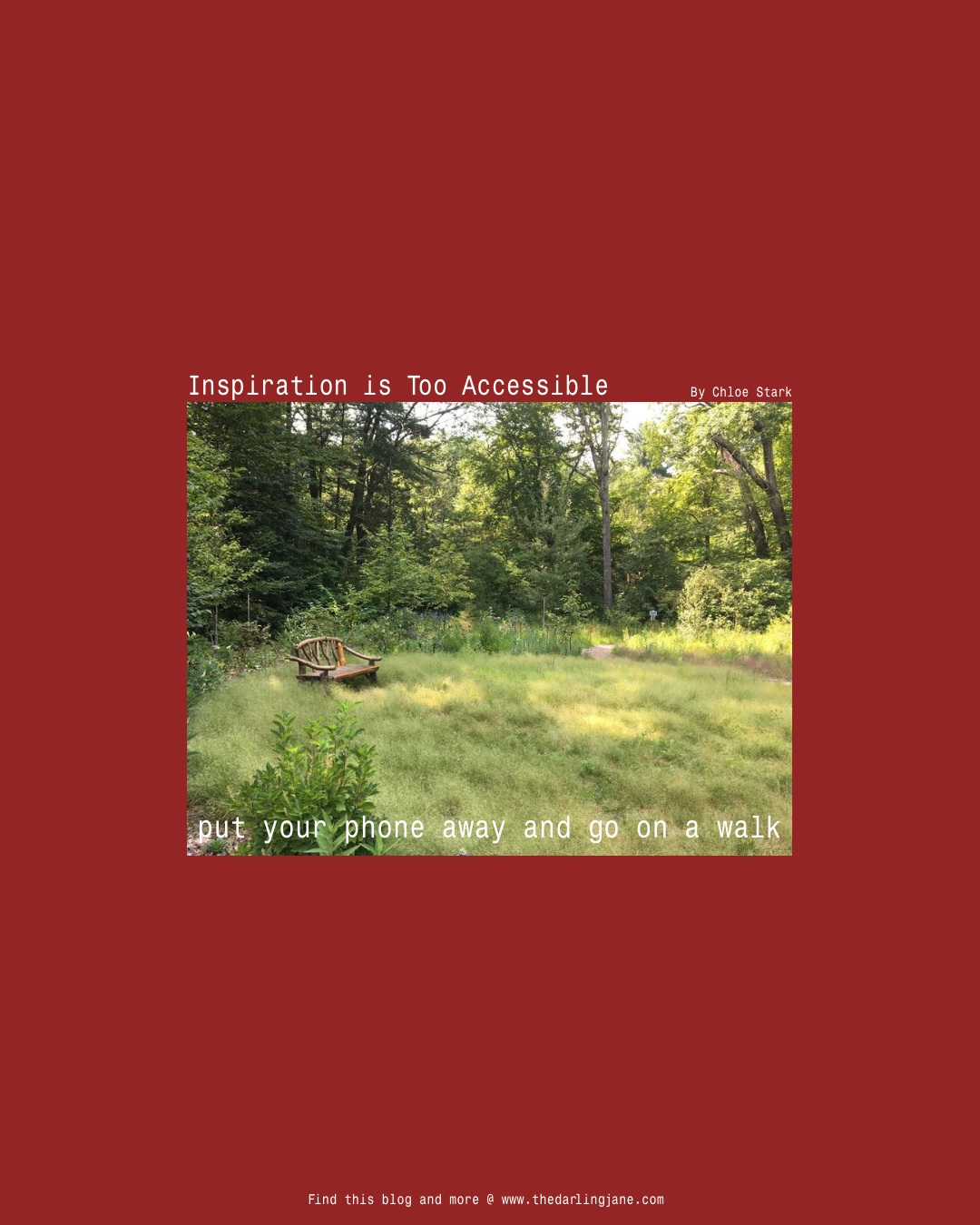
Knowing this allows one to be more careful while consuming to ensure that one's own sources of inspiration are genuinely unique. Creating becomes even more important when your inspiration has a significant emotional impact. Put your phone away and go on a walk, or buy that annual Vogue subscription. The inspiration will come while you sit in your room and discover new ways to understand yourself.