From Culture to Couture: Bringing the Irish Claddagh into the Modern Day
A thousand miles from anywhere that could be called home, I find solace on my left middle finger. For there sits my claddagh ring, a small silver band that binds me to my roots. Wherever I am in the world, I carry the love of my family, my culture, and my relationship with me. It is a meaningful reminder of my heritage, and it doesn't hurt that it’s also pretty stylish.
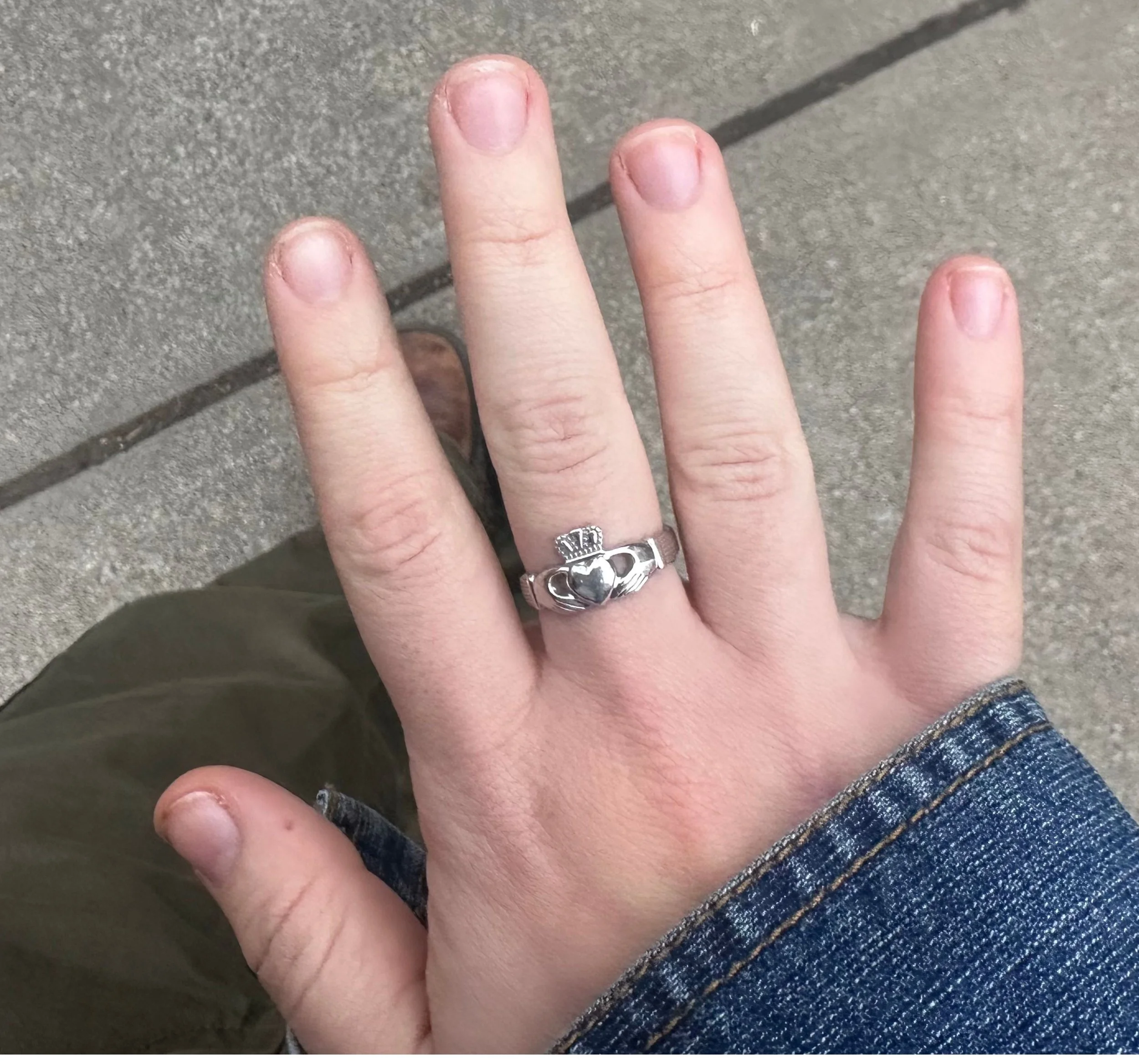
My dearly beloved and well-worn ring.
Claddagh rings are a symbol of Irish culture that have stood the test of time, through colonization, famine, and civil war. They were created in the 17th century in the small fishing village of Claddagh, outside of Galway. The rings were created to signal the relationship status of the wearer. Although its creation was many years ago, modern Irish people continue to honor this tradition.
The claddagh is not a closed practice, meaning anyone, regardless of nationality, gender, race, or sexuality, is welcome to wear it. However, taking the time to learn about its symbolism and how to wear it could deepen the wearer’s experience.
The central heart represents love. Although the ring traditionally represents relationships, this is only a part of the symbolism of the claddagh. The crown represents loyalty, an allusion to Ireland’s history of colonization under the English monarchy. It is worth noting that many young Irish people have begun rejecting this aspect of the claddagh, even going as far as to saw it off of their rings. The hands represent the steadfastness of friendship. It wraps around the heart in a way that invokes the feeling of a caring friend, wrapping you in support and encouragement. These emblemswork together to create an intricate design, symbolizing love in all its forms.
The claddagh not only holds deep significance in its unique form, but the four ways it can be worn have specific meanings. If worn on the right hand with the heart turned out, it signals that you are single and looking to find a partner. If the heart is turned towards you, it signals that you are in a relationship. If it is worn on the left hand turned out, it indicates that you are engaged, and turned in indicates that you are married.
In recent years, the symbol of the claddagh has been freed from its ring limitations. Many Irish brands have begun experimenting with making it into earrings, necklaces, and printing it onto clothes. This subversion of the tradition mirrors the resilience of the Irish culture and it’s ability to adapt to suit the times while honoring its steadfast traditions.
DITSY BITS is a Dublin-based brand that takes the claddagh imageand creates wearable designs for everyday. Their knitwear collection, which features the Claddagh l in red, navy, and green, became viral on TikTok and launched them into small brand stardom. Their collection also includes adorable jerseys that feature the claddagh alongside other Irish symbols such as the harp and the country’s true name “éire” (Which just so happens to be my middle name!)
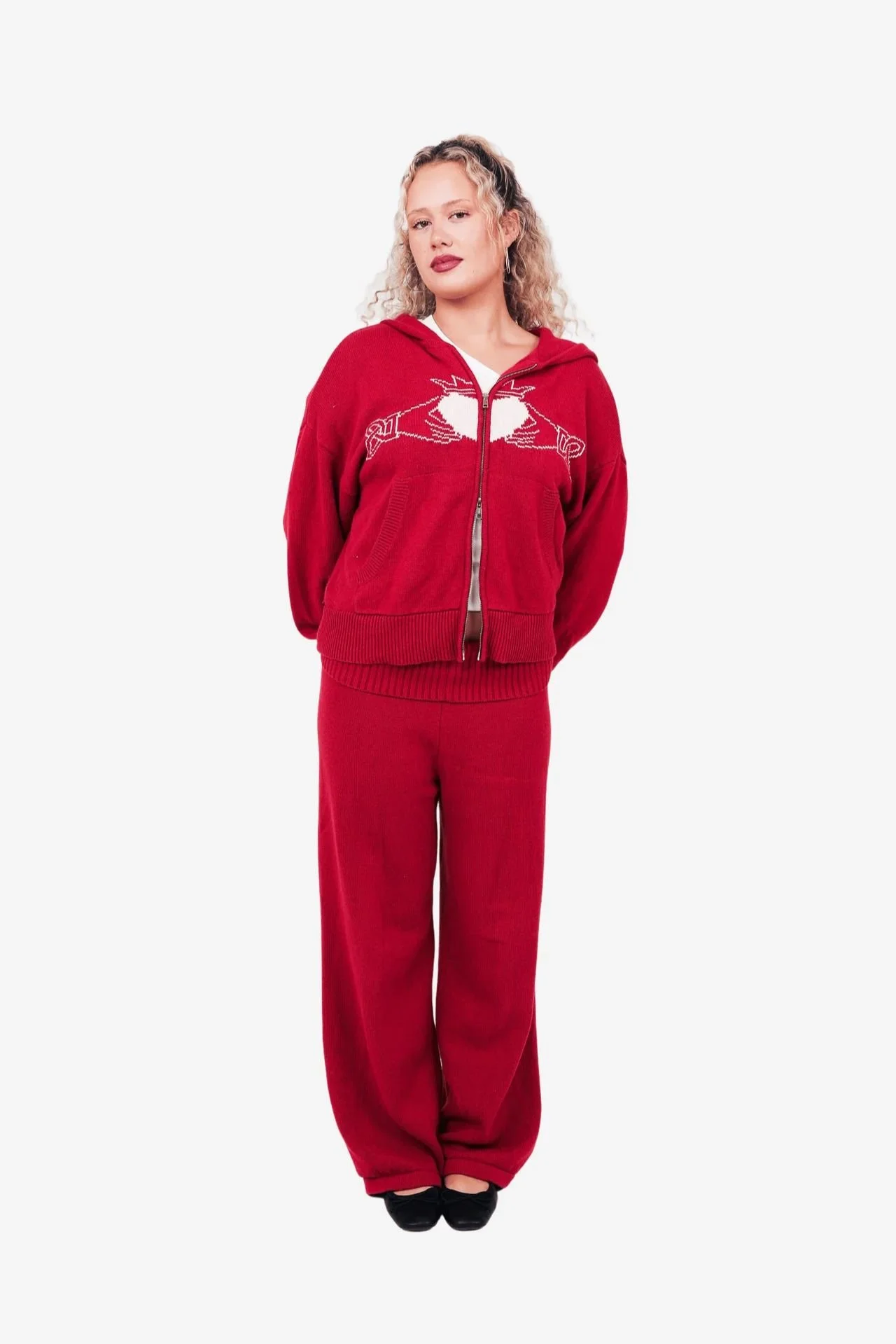
Image credit: DITSY BITS website
Red Claddagh Knit Cardigan – DITSY BITS LIMITED
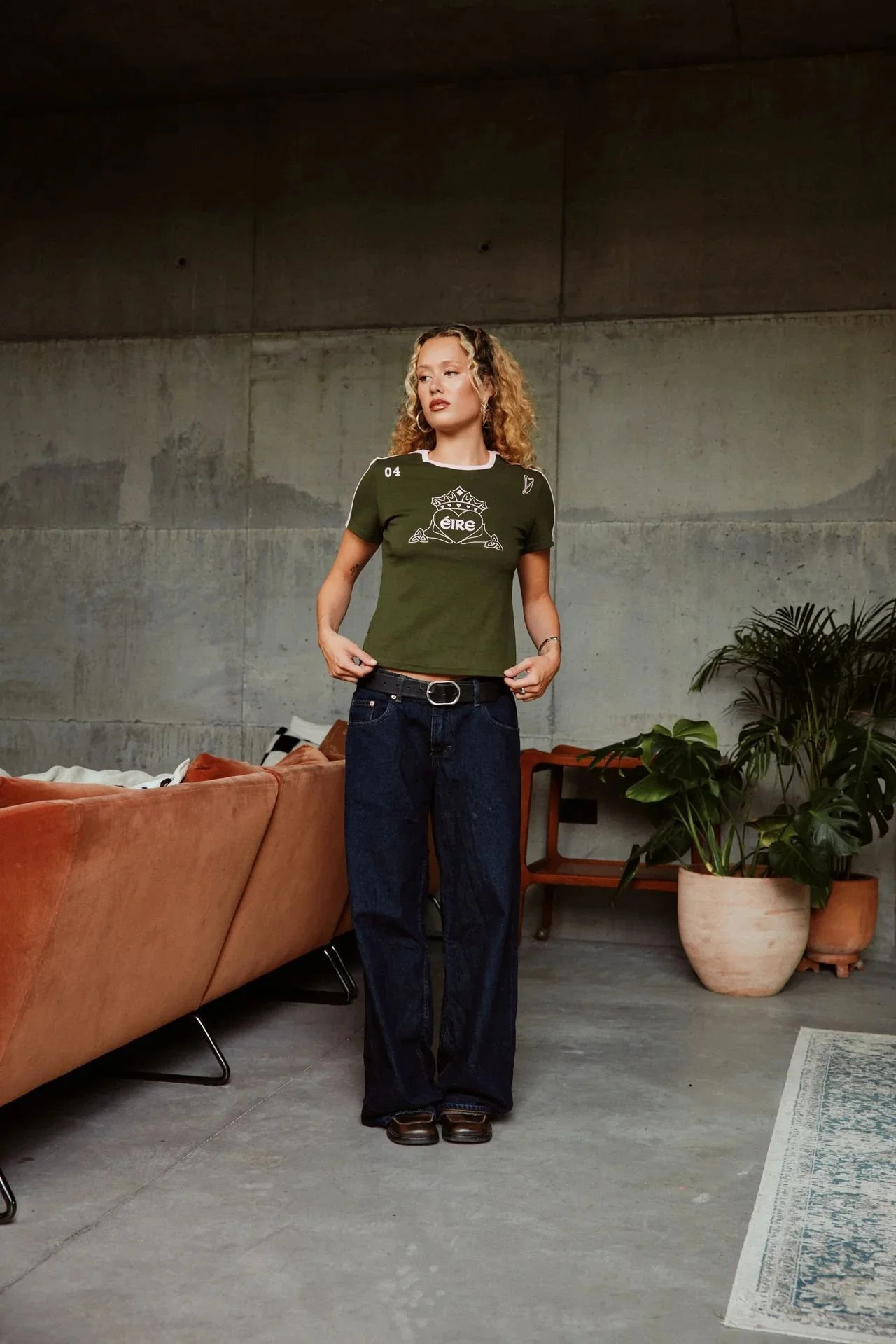
Image credit: DITSY BITS website
Claddagh Jersey in Military Green – DITSY BITS LIMITED
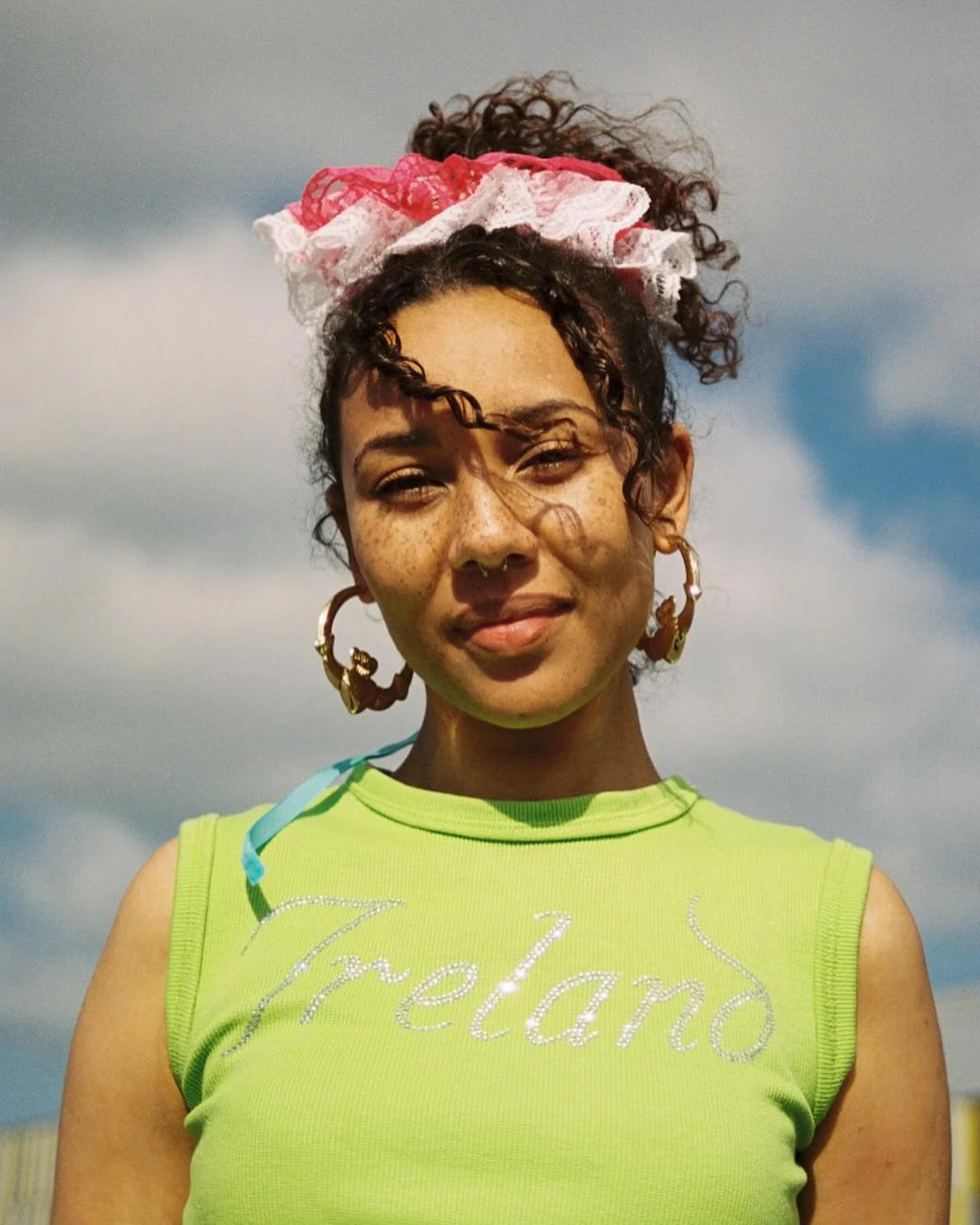
Image credit: @weegirl on Instagram
Wee Girl is a Belfast-based brand that was recently featured in Vogue UK’s editorial covering the wedding of Derry Girls actress Saoirse Monica Jackson. They create the chunky gold claddagh earrings that have taken Ireland by storm. Pictured here on Irish singer and producer Aika Mal, these earrings are beloved by celebrities and casual fashion enthusiasts alike.
Its clear that despite hundreds of years of history, the claddagh refuses to be defined. From metal rings to jackets and accessories, it's clear that the iconic symbol of culture has evolved over time, as all traditions become shaped by those who choose to honor it. As an Irish American, I hope to find my own way to participate in tradition and bring it into my world, as so many before me have done and so many will do long after me. The claddagh remains not only a living emblem of Irish culture, love, and history, but also a reminder of how the future of tradition lies in our hands.